
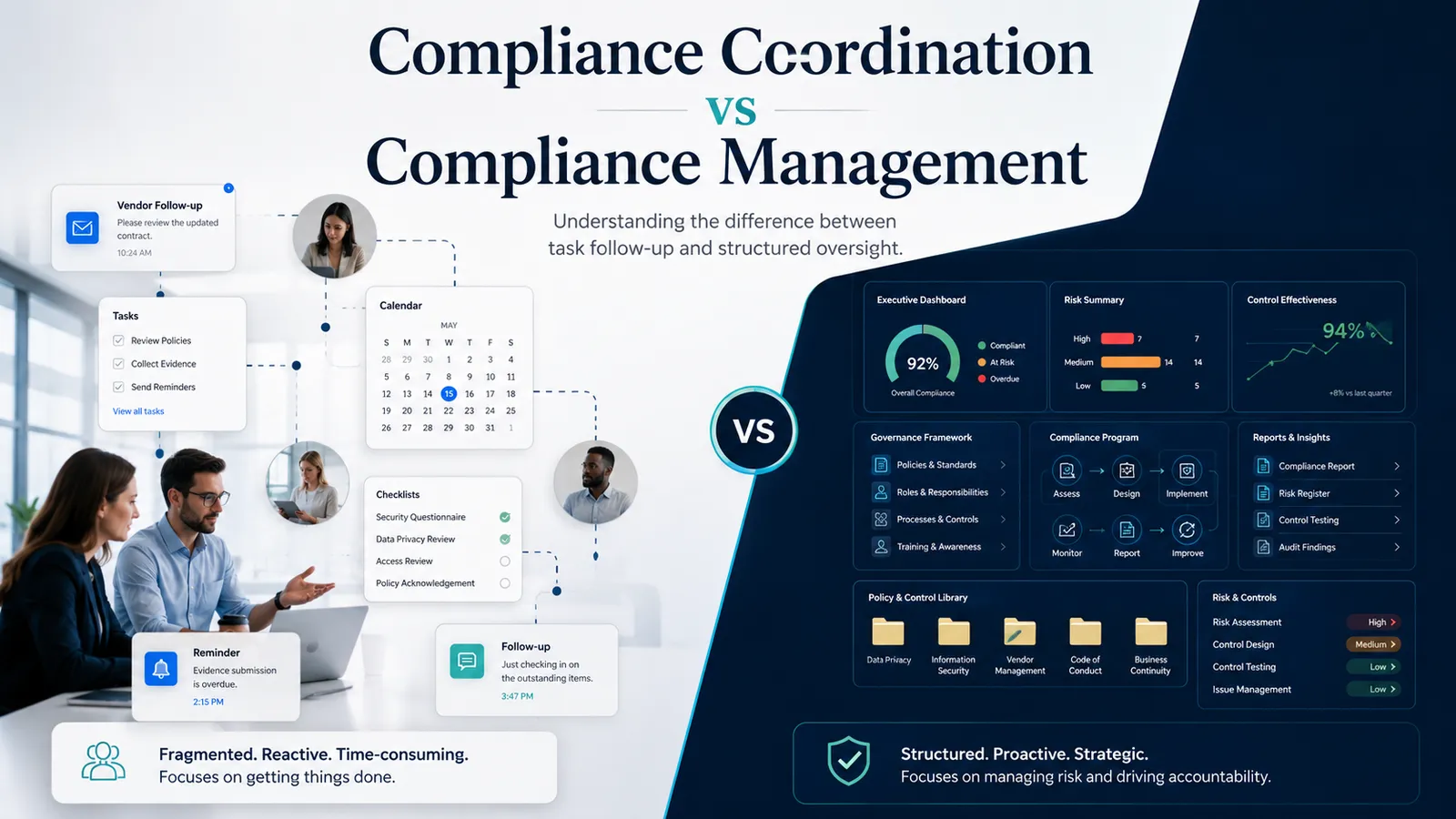
Compliance Coordination vs Compliance Management
The two terms are used interchangeably, and the difference matters more than it sounds.
Compliance management means holding statutory responsibility — filing returns, issuing certifications, giving professional opinions. In India that work belongs to licensed professionals: Chartered Accountants, Company Secretaries, Advocates.
Compliance coordination is the administration around that work: tracking what falls due, collecting documents ahead of time, routing them to the right professional and keeping a record of what was filed and when.
"Most compliance failures are not professional failures. They are coordination failures."
Why the distinction protects your business
Deadlines are rarely missed because a professional was unwilling. They are missed because a document arrived late, a renewal was not on anyone's calendar, or a question sat unanswered in an inbox for three weeks.
Coordination closes that gap. It does not touch the statutory work, and it should never claim to — but it determines whether the statutory work happens calmly and on time, or in the last forty-eight hours before a due date.
- Keep one calendar of every statutory and licence date
- Collect supporting documents well ahead of each deadline
- Give your professionals a single point of contact
- Record what was filed, when, and by whom
Insight Disclaimer
This article is for general information only. It does not replace advice from a qualified legal, tax or professional adviser.