
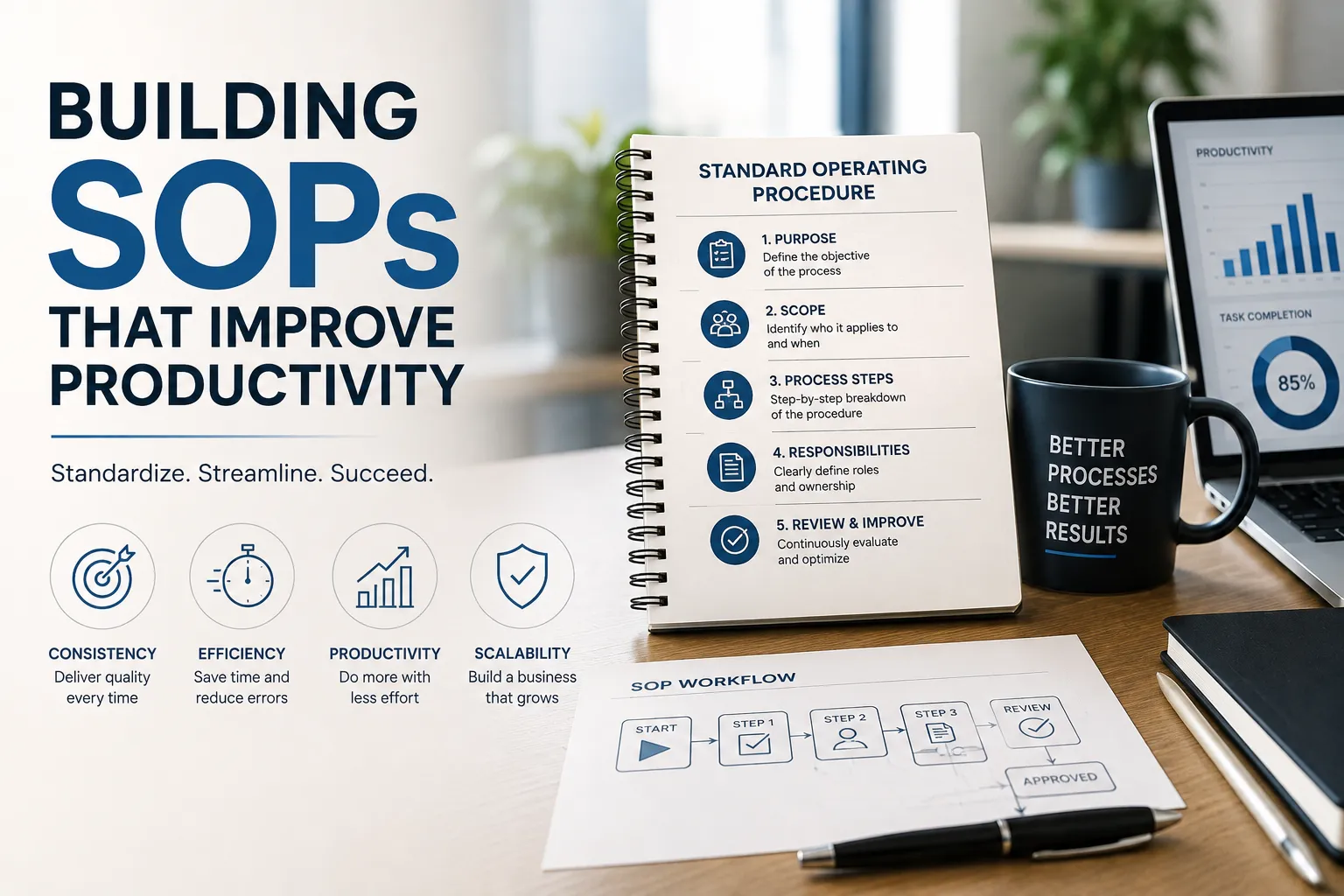
Building SOPs That Improve Productivity
Most SOP projects fail the same way: a long document is written once, filed carefully, and never opened again.
A useful SOP is short, owned by a named person, stored where the work happens and reviewed on a schedule. Length is not a measure of quality — use is.
Digital documentation makes this considerably easier. A procedure that lives in a shared, searchable location gets used; one that lives in a printed binder does not.
"An SOP nobody opens is documentation. An SOP the team follows is a system."
Writing procedures people actually follow
Begin with the processes that break most often or depend most heavily on one person — onboarding a new employee, closing the month, handling a customer complaint, releasing a payment. These give the fastest return.
Keep each one to a single page: the trigger, the steps, the owner, and what a finished result looks like. Then set a review date. A procedure that is never revisited quietly stops matching how the work is really done.
- Start with processes that break or bottleneck most often
- Keep each procedure to a single page with a named owner
- Store SOPs where the work happens, not in a separate archive
- Set a review date so procedures stay current
Insight Disclaimer
This article is for general information only. It does not replace advice from a qualified legal, tax or professional adviser.